
Author: Dr. María José Etulain Sórensen
International Trade Strategist | Supply Chain Analyst | USA–Argentina Business Expansion | Trade Defense
Date: April 21, 2026
A Trade Surplus with Structural Changes
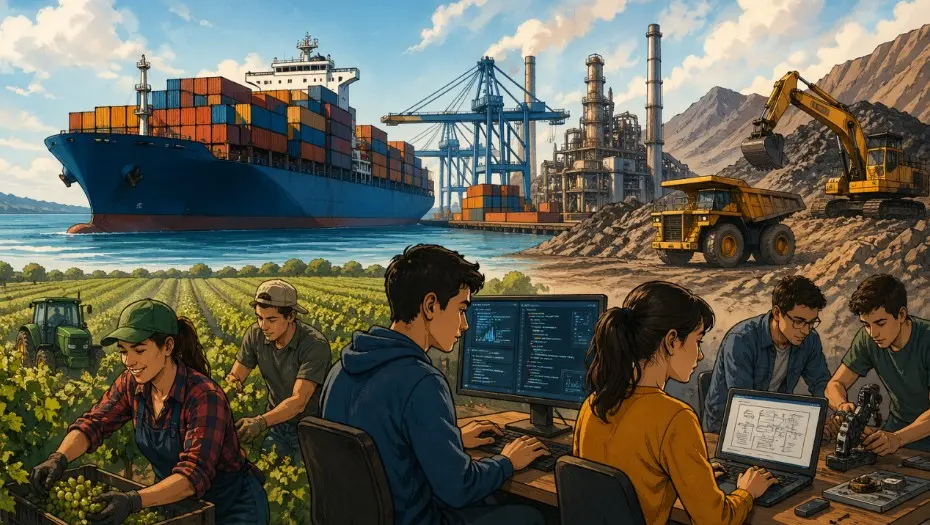
He foreign trade Argentina’s merchandise trade posted a positive balance in the first quarter of 2026. However, behind this result lies a clear pattern: energy, agriculture, and mining are driving exports. exports, while the industry loses relative weight.
Employment and transformation of the labor market
Analyzing the overall context reveals some key data: in a country of 48 million inhabitants, only slightly more than 1 in 10 Argentinians has formal private-sector employment. Furthermore, job losses continue in sectors such as industry, construction, and commerce.
This scenario directly impacts where job opportunities are generated, especially for new generations.
The growth of knowledge-based services
In this context, a third path emerges strongly, one that is no longer a promise, but a consolidated reality.
Knowledge-based services accounted for over 285,000 formal jobs, generating 9,000 new positions in the last year, and the software sector alone employs more than 159,000 people. Furthermore, exports from these services are projected to reach nearly USD 9.6 billion by 2025, positioning them as the country's third-largest export sector.
However, this phenomenon is not reflected in the trade balance of goods, which limits the traditional interpretation of foreign trade.
Strategic challenges for the Argentine economy
The challenge lies not in choosing between sectors, but in building a more balanced economy that allows for the development of formal, higher value-added jobs, aligned with the demand of international market.
For Argentina, a sustainable strategy requires strengthening technological education and the development of skills related to artificial intelligence.
Conclusion: present and future of foreign trade
Foreign trade in goods can define the current economic state of the country.
But the strategic decisions made today regarding the use of resources and the development of human capital will be decisive for the future and for future generations.
Do you need advice on foreign trade or international strategy?
Contact us at MJE Foreign Trade to support your decision-making in an increasingly dynamic global context.